Connor churches participating in European Heritage Open Days
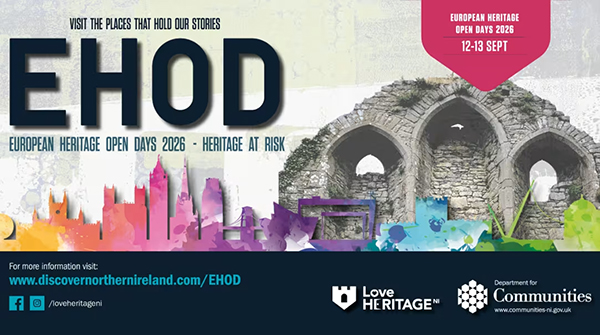
European Heritage Open Days (EHOD) return to Northern Ireland over the weekend of September 12 and 13, with a large number of Connor churches taking part.
Hosted by the Department for Communities, EHOD is Northern Ireland’s largest celebration of built, cultural and natural heritage, offering free access to hundreds of events, historic sites, and unique experiences across the region.
You can view a full guide to what is open and where HERE, but below are the church buildings in Connor Diocese which are participating in this year’s EHOD programme, with a bit about each building.
Lisburn Cathedral
There has been a church on this site since 1623, when Sir Fluke Conway built his Castle and a church which gained Cathedral status in 1663. The present building dating from the 1720s.
At the heart of Lisburn’s Conservation Area, the Cathedral links local heritage with major global events, including the American War of Independence (USA250), the 1798 United Irishmen, the 1920 murder of DI Oswald Swanzy in Market Square, the Huguenots and the rise of the linen industry. Memorial windows commemorate Sir Richard Wallace, Sir Milne Barbour and Charles Craig MP.
The surrounding graveyard draws attention to the challenges of caring for historic burial grounds, many now regarded as heritage at risk. Notable burials include Louis Crommelin and Sir George Rawdon. A visit offers a powerful connection to shared history, memory and place.
Opening times – Saturday September 12 10am-4pm
All Saints’, Eglantine
Built in 1875, this B+ listed church was designed by the architect Sir Thomas Drew and was built by the Mulholland family in memory of St Clair Kelburn Mulholland. St Clair was one of five brothers who founded the York Street spinning mills in Belfast. When he died, his daughter Mary Filgate Mulholland decided to build this private chapel in his memory.
The Mulholland family helped to maintain this church, providing a sexton’s house, a schoolhouse at Newport and a Rectory. The church became part of the then Diocese of Down, Connor and Dromore in 1916 and has been in use as a parish church ever since.
The founder of the Ulster Architectural Society Sir Charles Brett believes that All Saints’ is the finest ever designed by Thomas Drew, built in a distinctly English style with walls of black stone and small red roof tiles. The interior is particularly ornate with an apsidal sanctuary lined with encaustic tiles. Brett tells us that Sir Thomas Drew (1838-1910) worked for Charles Lanyon and designed many churches throughout Ulster, before being appointed as diocesan architect of Down, Connor and Dromore in 1865. He was knighted in 1900 as part of the Queen’s birthday honours.
The Mulholland’s are buried in the family plot in the grounds of the church. A parish graveyard came into existence in the 1920’s and it contains 21 Commonwealth War graves.
Opening times – Saturday September 12 10am-4pm; Sunday September 13 2pm-4pm
St John’s, Malone
Come and visit this unique building! The Church of St John’s, Malone, is renowned for its English Decorated Gothic architecture, stained glass and choral music.
Built as a Victorian Church of Ireland church between 1893 and 1895, with the nave added in 1906, it was designed by the Belfast architect Henry Seaver, brother of the then Rector Richard Seaver. Standing for over 125 years, the church remains a testament to Belfast’s spiritual and architectural heritage, welcoming generations.
Its exterior features a multiple recessed double doorway adorned with carved heads. Constructed from Scrabo limestone, buff pink sandstone and Locharbriggs sandstone, the church radiates grandeur and warmth. Inside, the Annadale red brick lining creates a welcoming atmosphere.
Almost every window is graced with stained glass, a kaleidoscope of light and colour crafted by renowned Irish artists such as Evie Hone, Wilhelmina Geddes and Catherine O’Brien.
These windows tell stories, celebrate faith, and connect us to Ireland’s rich artistic heritage. The church achieved Grade B listed status in 1985 and continues to be a living place of worship, where visitors are warmly welcomed to attend regular Sunday services.
Visitors may enjoy a self-guided tour of the windows and building, with volunteers on hand to assist, answer questions, and provide further insight.
Opening times – Saturday September 12 10am-12.30pm
Drummaul Parish Church
Drummaul Parish Church was built on this site around 1840 and has an adjacent graveyard which served the previous church which existed on the site prior to the present church being built. we have an ancient Ballum stone which was taken from the wall of the previous church and re used in our present church as an alternative font, although some parishioners continue to use the O’Neill font (see picture). The church also uses an ancient but well maintained Organ dating back to 1833 (one of the first in Connor Diocese. On the day visitors will get the opportunity to make their own St. Brigid’s Cross or take one that has been prepared.
Opening times – Saturday September 12 1.30pm-4pm
Ballinderry Middle Church
Tours of a plantation-era ‘barn church’. Be guided by one of our enthusiastic volunteers, or feel free to wander at your own pace and enjoy the simplicity of the church at leisure. Written information will be provided to keep you informed as you walk around.
Informally known as “Jeremy Taylor’s Church,” The Middle Church in Ballinderry, Co Antrim, is widely considered to be one of the finest examples of a plantation church in Ulster. The interior contains some fine articles of interest, such as the original 17th century communion table and oak pews with fixed candleholders. The three deck oak “pepper pot” pulpit has the lowest seat for the parish clerk who led the responses of the congregation, the middle seat for the conduct of the service, readings and prayers and the upper section for the preacher. Also of interest is a funeral hatchment bearing the coat of arms of Bishop Taylor.
The church is on rising ground, at a short distance from the car park. If required, cars can be brought to the door for dropping off visitors with mobility difficulties. The floor is constructed of stone flags.
Opening times – Saturday September 12 10am-4pm
St Patrick’s, Ballymena
Visit St Patrick’s Church of Ireland, Ballymena – one of the town’s iconic ‘Seven Towers’ – as part of Ballymena’s 400th anniversary celebrations. Built in 1855, the church is a striking landmark with a rich history at the heart of the local community.
Visitors are invited to explore the church and join short guided walking tours to the Old Churchyard, led by qualified tour guide and local historian Alastair Donaghy. Tours depart from the church on Saturday at 11.00am and 1.00pm, and on Sunday at 3.00pm, offering an opportunity to discover the stories and heritage of this historic site.
Reflecting the theme of Heritage at Risk, the Old Churchyard highlights ongoing efforts to safeguard vulnerable historic spaces. Currently the focus of discussions on preservation and protection, it offers visitors a chance to engage with the challenges of caring for heritage while appreciating its significance.
This is a unique opportunity to experience both the rich architectural heritage of St Patrick’s Church and the evolving story of conservation in action.
Opening times – Saturday September 12 10am-4pm; Sunday September 13 2pm-4pm
St Stephen’s, Millfield, Belfast
Enjoy a ‘behind the scenes’ tour of the Victorian Treasure that is St Stephen’s Church of Ireland Church on Millfield in Belfast. As you enter through the 1960’s façade be surprised by the original 1869 Victorian arcaded form.
The first ‘free church’ in Belfast, designed by Thomas Drew, recent modifications have created a multipurpose worship and ministry space which is still in use. Enjoy refreshments as we tell you the story of this beautiful church, originally constructed in 1868-69 to designs by Sir Thomas Drew (1838-1910). St. Stephen’s was the first new church building Drew completed as diocesan architect, his career culminating in his design for St. Anne’s Cathedral which he completed in 1904.
Remarkably St Stephen’s survived the Blitz of Belfast in 1941 when much of Millfield Street was demolished and the church contains ‘the finest collection in the province of stained glass by Daniel Braniff’ (Patton, p. 236).
The church has a rich history, the Vestry is built over a well which served the area in Victorian times and the church hall which is now demolished was not only a space for social and spiritual activities but originally an Elementary School and in later years a base for British Forces during ‘the troubles’. Ministry continues on a Sunday and a partnership with The Hub Chaplaincy at Queen’s University Belfast provides a vibrant ministry to students in both the Belfast Metropolitan College and Queen’s University Accommodation nearby.
Opening times – Saturday September 12 10am-4pm
St John the Baptist, Dunluce
The present church of St John the Baptist, Parish of Dunluce, dates from 1821, but stands on the ancient ecclesiastical site of Portcaman, first recorded in 1262. The site has links not only to the Norman period, but also with the Knights of St John of Jerusalem and the Crusades.
The original church fell into disrepair during the 1600s and St Cuthbert’s Church at Dunluce Castle, ancestral seat of the Earls of Antrim, became more prominent. But then in 1821, with the demise of Dunluce Castle and the growing importance of the town of Bushmills, it was decided to abandon St Cuthbert’s, move back over the hill, and build a new church of St John the Baptist on the Portcaman site.
The Select Vestry of Dunluce Parish invites visitors into the building for EHOD to explore the church, learn about its past and see how parishioners have been able to revive and reimagine the building over the years. Photographs will show how the church was stripped to its bones in 2009 for major restoration, and then reborn in its present form. More recently, the bi-centennial celebrations (held in 2022—a year late because of Covid-19) provided the opportunity to mark this milestone anniversary with a contemporary stained glass window which subtly acknowledges the product that Bushmills is world-famous for. Parishioners have resisted many challenges over time, and the church continues to offer a vibrant Christian centre at the heart of community life in the village.
Visitors of all ages are welcome, and a children’s quiz sheet will be available to help younger visitors engage with the building and its history. Volunteers will be in attendance to assist and provide information as required.
A warm welcome is also extended if you wish to join for normal Sunday Service at 11am0.
Opening times – Saturday September 12 & Sunday September 13 10am-4pm
Belfast Cathedral
Explore this striking listed building, rich in history, architecture, and meaning. Use a multilingual guide or audio tour to discover highlights including the Baptistry, mosaics, Carson Tomb, Titanic Pall, and the Spire of Hope. Guides available in eight languages: English, French, German, Spanish Portuguese, Italian, Polish and Mandarin.
Reflecting this year’s theme, Heritage at Risk: Revive, Resist, Reimagine, the Cathedral also tells a story of vulnerability and care. Built on wooden piles beneath the city, it now faces challenges linked to climate change, making ongoing conservation essential.
Maintained through dedicated effort and volunteer support, the Cathedral is both a place of discovery and a powerful example of how heritage can be protected for future generations.
We invite our visitors to thoroughly explore the Cathedral-there is so much more to discover!
Opening times -Saturday September 12 10.30am-3.30pm; Sunday September 13 1pm-3pm
Gartree Parish Church
Discover Gartree Parish Church, a charming rural church built in 1831 and set within peaceful countryside near Crumlin. This Grade B+ listed building is a fine example of Gothic Revival architecture, constructed in basalt with sandstone detailing. Its distinctive features include a simple nave and chancel, a pinnacled tower and elegant lancet windows, showcasing the craftsmanship of the early 19th century.
Visitors are invited to explore the church and its quiet setting, taking in its architectural character and strong connection to the local community over generations. Its secluded location adds to the sense of stepping back in time.
Reflecting the theme of Heritage at Risk, Gartree highlights the importance of caring for smaller, rural historic buildings. While modest in scale, it represents an important part of Northern Ireland’s built heritage—reminding visitors of the need to value and protect these places for the future.
Opening times – Saturday September 12 10am-4pm; Sunday September 13 9am-1pm
St Matthew’s, Shankill, Belfast
St Matthew’s Church was completed 1872 to a replace an older Chuch on the site of early Christian Church which was believed to date from the fifth century. The church is built to an ‘ultra Hibernian’ design.
The building is in the shape of a Shamrock and has an Irish Round Tower as steeple. The building features an impressive rose window and exceptional stained glass windows. The pulpit is a WW1 memorial featuring the names of many from the Parish who died in that war. The Balluan Stone an early Christian font was moved to the Church from Shankill Graveyard in 1901.
Opening times – Saturday September 12 10ma-4pm; Sunday September 13 1pm-4pm
Ballintoy Parish Church
Ballintoy Church is a small but striking rural church set above the North Antrim coast within the Ballintoy Conservation Area.
Exposed coastal conditions highlight the ongoing challenges of caring for historic sites such as this.
As part of European Heritage Open Day, the church will be open for viewing and quiet prayer, offering visitors a peaceful place for reflection and connection.
Opening times – Saturday September 12 9am-4pm; Sunday September 13 1pm-4pm.
St Patrick’s, Glenarm
Set on Ballymullock Road overlooking the stunning Ballygally Bay, St Patrick’s Church of Ireland is a place of deep history and ongoing worship. The site dates back to at least 1306, when it was recorded as a medieval church, and continues to welcome visitors today.
Inside, discover striking features including a vibrant east window by the renowned Mayer of Munich, and two south windows depicting St Patrick on Slemish and commemorating Captain John Park of the Larne–Fleetwood ferry. The font—still in use—originates from Ballynure Church and is associated with Dean Jonathan Swift, author of Gulliver’s Travels.
The historic graveyard, in use since medieval times, includes the remains of the famous Spanish Armada tree and its offspring, alongside graves with links to families connected to emigration through Ellis Island—adding a meaningful connection to this year’s USA 250 theme.
The church continues to be carefully maintained, with recent work including the restoration of paths and ongoing repairs to original cast iron windows and interior fabric. Reflecting the theme, Heritage at Risk: Revive, Resist, Reimagine, these efforts highlight the importance of preserving both the building and its stories for future generations.
Located at the start of the Ulster-Ireland section of the International Appalachian Trail, and featured in local heritage programmes, this is a unique opportunity to explore a place where local, national, and international history meet.
Opening times – Saturday September 12 & Sunday September 13 1pm-5pm
St Nicholas’, Carrickfergus
St Nicholas’ Church, founded in 1182 by the Anglo Norman knight John de Courcy shortly after the construction of Carrickfergus Castle, is unique in Ulster and has served as a place of worship for over 800 years. Situated in the heart of the town, just 200 metres from the Castle, it is one of Northern Ireland’s most significant medieval churches.
Visitors can admire surviving Norman features, including columns and a piscina, medieval grave slabs, and ‘ghost marks’ that reveal the church’s architectural development from the 1305 enlargement through major 17th century works commissioned by Sir Arthur Chichester. The impressive Jacobean Chichester Memorial, crafted in marble and alabaster, is a highlight, alongside the Priest’s Door and fine stained glass by An Túr Gloine artists such as Ethel Rhind and Beatrice Elvery.
The church also has transatlantic connections: the graveyard contains William Crispin, buried by William Penn, father of the founder of Pennsylvania.
As with many buildings of great age, St Nicholas’ reminds visitors of the ongoing care needed to protect historic places, ensuring this remarkable church continues to be enjoyed by future generations.
Opening times – Saturday September 12 10am-4pm; Sunday September 13 1pm-4pm
St Saviour’s, Connor
St Saviour’s Church in Connor, County Antrim, is a Church of Ireland parish church consecrated in 1813 on a site with early monastic roots dating back to the 4th century. It was built on the remains of a medieval cathedral destroyed in the 1640s, marking centuries of religious activity.
The building consists of a nave and tower and a large north transept added in 1866. Inside, there are historical drawings of the original 12th-century ruins and a shaft of Connor’s high cross from the 800s.
The churchyard contains a ‘corpse house’ used in the 1800s for the safekeeping of bodies before burial.
Come along and visit the church to hear about the fascinating history of the site and explore the church and grounds.
Opening times – Saturday September 12 10am-4pm; Sunday September 13 1.30pm-4pm
St George’s, High Street, Belfast
St George’s Church is an historic and welcoming Church of Ireland building, long associated with worship, music and civic life in the area. Visitors are invited to step inside, enjoy tea or coffee, and chat with friendly volunteers who will share stories about the church’s history, traditions and role in the community.
Music has always been central to life at St George’s, and visitors can learn more about ongoing efforts to restore the church’s historic organ, ensuring it continues to enrich worship and events for future generations. A visit offers a chance to experience living heritage in a place that is carefully cherished and actively used today.
Opening times – Saturday September 12 10.30am-4pm; Sunday September 13 1pm-3.30pm
St Catherine’s, Killead
Erected in 1712 and sensitively restored between 2003–2004, this fine Gothic Revival church features a distinctive bell‑cote and traditional lych gate. In 1885, architect J.J. Philips carried out major alterations that helped shape the building visitors see today.
Inside, you’ll find beautiful stained‑glass windows, including a notable example by W.M. Morris of Westminster, along with 46 war graves dating from the First World War – an evocative reminder of the community’s past. Refreshments will be available during your visit. Directions: Located on Killead Road, with access through the military base. Approach from Killead Village or Randox Road. Important: This property sits within a military compound. ID is required for entry- please bring a passport or driving licence.
Opening times – Sunday September 13 3pm-5pm


Site Directory
- Home
- All Aboard Year 3 Resources
- Cookie Policy
- Privacy Policy
- About us
- News
- Parishes
- Agherton
- Ahoghill and Portglenone
- Antrim
- Ardclinis, Tickmacrevan, Layde and Cushendun
- Armoy, Loughguile and Drumtullagh
- Ballinderry
- Ballintoy, Dunseverick and Rathlin
- Ballymacash
- Ballymena (Kilconriola) and Ballyclug
- Ballymoney, Finvoy and Rasharkin
- Ballynure and Ballyeaston (Ballyclare)
- Ballyrashane & Kildollagh
- Ballywillan, Portrush
- Belfast Cathedral
- Billy & Derrykeighan
- Blackstaff Mission Area
- Broomhedge
- Carnmoney
- Carrickfergus
- Christ Church, Lisburn
- Cloughfern
- Coleraine
- Connor and Antrim St Patrick
- Craigs, Dunaghy and Killagan
- Derriaghy
- Derryvolgie
- Drummaul, Duneane and Ballyscullion
- Dunluce
- Dunmurry
- Eglantine
- Finaghy and Upper Malone
- Glenavy
- Glencairn
- Greenisland
- Holy Trinity and St Silas with Immanuel
- Jordanstown
- Kilbride
- Kilmakee Parish
- Kilroot and Templecorran
- Kilwaughter and Cairncastle with All Saints Craigyhill
- Lambeg
- Larne & Inver, Glynn & Raloo
- Lisburn Cathedral
- Lisburn St Paul’s
- Magheragall
- Mallusk
- Malone
- Monkstown
- Mossley
- Muckamore and Killead
- Ramoan and Culfeightrin (Ballycastle)
- Rathcoole
- Saint Katharine
- Skerry, Rathcavan & Newtowncrommelin
- St Bartholomew’s, Stranmillis
- St George’s
- St Mark (Ballysillan)
- St Mary with Holy Redeemer
- St Matthew’s, Shankill
- St Michael Belfast
- St Paul & St Barnabas
- St Peter & St James
- St Stephen and St Luke (Lower Falls)
- St Thomas’s
- Stoneyford and Gartree
- Templepatrick and Donegore
- The United Parishes of St Nicholas and All Saints
- Upper Falls
- Whitehead & Islandmagee
- Whitehouse St Ninian
- Whiterock
- Woodburn
- Children/Youth
- Support
- Connor Connections
- Vacancies
- Links
Follow us online
© Copyright The Church of Ireland Diocese of Connor 2026 | Web Design by LD2.digital